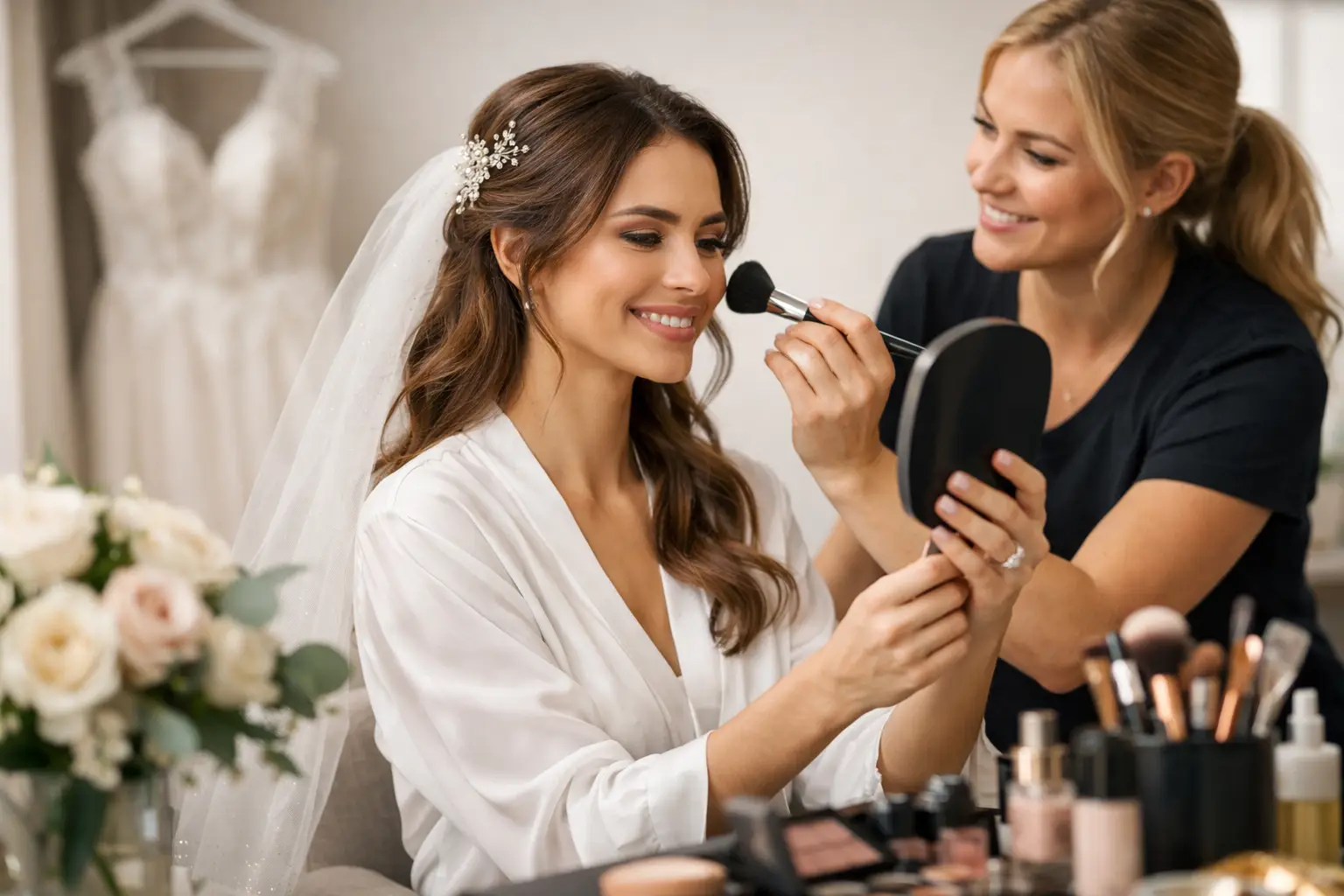
Your bridal trial is not a test you need to pass. It is the moment your ideas, your wedding setting, and your personal style begin to take shape together. Knowing how to prepare for bridal trial appointments helps your artist understand what makes you feel most like yourself – only more polished, confident, and camera-ready.
A thoughtful trial also creates breathing room before the wedding day. Rather than making beauty decisions while a photographer is arriving and family members are gathering, you can refine the details early and walk into your celebration knowing exactly what to expect.
Start With the Feeling You Want to Have
Before collecting inspiration photos, consider the overall feeling you want when you look in the mirror. Do you picture soft and romantic, refined and classic, naturally luminous, or a little more defined for an evening celebration? The answer does not have to fit neatly into one trend. It simply gives your hair and makeup artist a useful starting point.
Your venue and wedding season can help guide those choices. A mountain ceremony in Western North Carolina may call for a style that feels graceful in shifting weather and photographs beautifully against natural scenery. A formal ballroom reception may support a more sculpted updo or a richer lip color. Still, your own comfort matters most. If you rarely wear a bold lip or tightly pulled-back hair, your wedding day is usually not the time to force a completely unfamiliar version of yourself.
Bring a few words that describe your vision alongside your photos. Terms such as soft texture, clean skin, timeless, romantic, polished, or effortless can reveal more than a gallery of images alone.
How to Prepare for Bridal Trial Inspiration
Inspiration is helpful, but too many unrelated images can make it harder to find a clear direction. Aim for five to 10 photos that show the elements you genuinely love. Include a mix of hair and makeup references, ideally on people with a similar hair texture, skin tone, or face shape when possible.
Pay attention to what you are responding to in each image. You may love the loose pieces around the face in one hairstyle, the low placement of an updo in another, and the skin finish in a third. Let your artist know those specifics. A seasoned bridal professional can translate the parts you love into a look designed for you, rather than trying to copy a photo exactly.
It is also useful to bring a photo of your wedding dress, any ceremony or reception outfit changes, and your accessories. The neckline of your gown can influence whether an updo, half-up style, or flowing waves feels most balanced. Earrings, a veil, hairpins, and even the scale of your bouquet can affect the finished look.
If you are wearing your hair naturally curly, have extensions, or plan to use a family veil, mention it before the appointment. Those details can change the timing, products, and styling approach needed for a secure, comfortable result.
Arrive With a Clean, Comfortable Canvas
The best preparation is simple: follow the pre-appointment guidance from your artist. For makeup, most brides should arrive with clean, moisturized skin and no makeup unless instructed otherwise. Avoid introducing a new facial treatment, strong exfoliant, or unfamiliar skincare product in the days before your trial. Healthy-looking skin is the goal, and irritation is not worth the risk.
For hair, the right preparation depends on your hair type and planned style. Some looks hold best with clean, dry hair, while others benefit from hair washed the day before. Fine hair, very curly hair, extensions, and sleek styles all have different needs. Ask your stylist for personalized instructions rather than relying on the old idea that every updo requires unwashed hair.
Wear a white, cream, or similarly light-colored top with a neckline that resembles your wedding dress if you can. This makes it easier to see how the makeup tones and hairstyle will read alongside bridal colors. A button-front shirt is especially convenient if you plan to change after the appointment without disturbing your hair.
Bring the Details That Affect the Final Look
Your bridal trial is a collaborative appointment, and honest information allows your artist to care for you well. Share any skin sensitivities, allergies, contact lens concerns, hair challenges, or products you know do not work for you. Tell them whether you tend to get shiny through the T-zone, whether lashes usually bother your eyes, or whether your curls fall quickly in humidity.
Bring your veil, hair accessories, and earrings if they have already been chosen. Trying them during the trial is the best way to confirm placement and comfort. If an accessory feels too heavy or a veil does not sit securely with your preferred hairstyle, you have time to make a graceful adjustment rather than a last-minute compromise.
A small touch-up product you hope to use, such as a meaningful lipstick shade, can also be worth bringing. Your artist can help decide whether it complements the makeup plan and whether a similar shade may wear more comfortably through hugs, photos, dinner, and dancing.
Speak Up During the Appointment
A bridal trial should feel calm and unhurried, but it should also be a real conversation. If your foundation feels heavier than you expected, your lashes seem too dramatic, or you wish the waves had more movement, say so while you are in the chair. Clear feedback is not criticism. It is how your artist learns your preferences and fine-tunes the look for your wedding day.
Try to separate “this is different” from “this is not me.” Bridal hair and makeup often feel more polished than your everyday routine because they must last, photograph well, and hold up under a full day of emotion and activity. Give yourself a few minutes to adjust before deciding, then assess whether the look still reflects you.
If you are deciding between two options, take photos in natural light and indoor light. Look at them later, when you are not focused on every tiny detail in the mirror. You may find that a slightly more defined eye or a more structured hairstyle reads beautifully in photographs while still feeling natural in person.
Test Your Look Beyond the Studio Mirror
After your trial, wear the look for several hours if your schedule allows. Step outside, sit in a warm car, have a meal, smile, laugh, and notice how the hairstyle and makeup feel. This practical wear test can reveal whether you need a stronger hold, a different lip formula, less contour, or a few bobby-pin adjustments.
Take photos from the front, side, and back. Ask a trusted person to take a few candid images rather than relying only on selfies. The goal is not to inspect yourself harshly. It is to make sure your beauty choices feel balanced from every angle and still look like you.
Make a few notes afterward while the experience is fresh. Record what you loved, what you would change, the products that felt especially comfortable, and the exact placement of accessories. Your artist may keep their own detailed notes, but your perspective is valuable too.
Use the Trial to Plan a Smoother Wedding Morning
The trial is also the right time to discuss wedding-day logistics. Confirm where services will take place, who is receiving hair or makeup, and whether anyone in your group has special timing needs. A mother of the couple, a young flower girl, or a bridesmaid with exceptionally long hair may need a different place in the schedule.
Ask what your getting-ready space should include. Good natural light, accessible outlets, a comfortable chair, a clear work surface, and enough room for your beauty team all make a meaningful difference. For on-location weddings, a professional team can help create a timeline that keeps the morning relaxed while ensuring everyone is ready when photography begins.
Jeanne’s Hair & Makeup approaches each trial as preparation for more than a beautiful final look. It is an opportunity to build trust, confirm details, and create a wedding morning that feels cared for from the first brushstroke to the final photo.
When you leave your bridal trial, you should feel excited rather than uncertain. Bring your vision, stay open to professional guidance, and give yourself permission to refine the details. That little bit of preparation makes room for the best part: being fully present when it is time to celebrate.

Comments are closed.