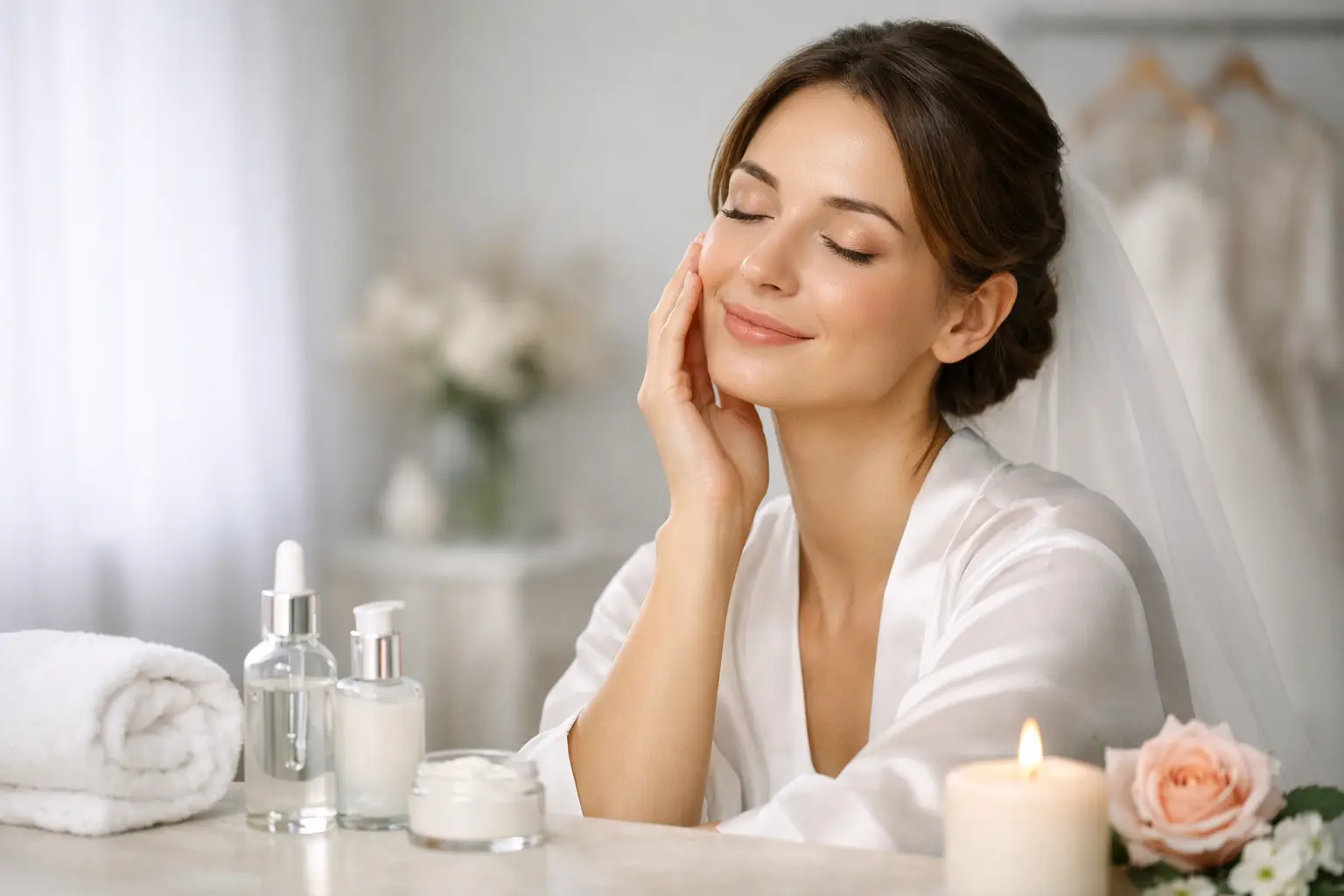
Your wedding makeup should feel like an elevated version of you, not a mask applied to solve last-minute skin concerns. The most photographed day of your life is not the time to test a powerful peel, buy an unfamiliar serum, or chase someone else’s glass-skin routine. This guide to bridal skin prep is designed to help you create a calm, consistent plan that supports healthy-looking skin, comfortable makeup wear, and the timeless finish you want in person and in photographs.
Great bridal skin is not about perfection. It is about skin that is hydrated, balanced, and cared for in a way that works with your individual complexion. A thoughtful routine gives your makeup artist the best possible canvas, while helping you feel relaxed and confident when the wedding day arrives.
Start Your Bridal Skin Prep Early, but Keep It Simple
Ideally, begin your bridal skin prep plan six to 12 months before your wedding. That window gives you time to address ongoing concerns, such as acne, dryness, uneven tone, sensitivity, or texture, without rushing your skin through too many changes at once. If your wedding is sooner, do not worry. Consistency over the next few weeks can still make a visible difference.
If you have a trusted dermatologist or esthetician, schedule a consultation early. They can help you decide whether professional treatments make sense for your skin and timeline. This is especially helpful for persistent breakouts, melasma, rosacea, deep scarring, or reactive skin. Professional guidance is more valuable than a collection of trendy products that may not suit you.
For many brides, the strongest home routine is also the most straightforward: gentle cleansing, moisturizer, daily sunscreen, and a targeted treatment if your skin tolerates it. The goal is to support your skin barrier, which helps skin retain moisture and look smoother under makeup.
Build a Routine Your Skin Can Rely On
A bridal routine does not need to be complicated to be effective. In fact, adding several active products at once can lead to irritation, flaking, or unexpected breakouts. Introduce only one new product at a time, then give your skin two to three weeks to respond before making another change.
In the morning, cleanse gently if needed, apply a moisturizer suited to your skin type, and finish with broad-spectrum SPF 30 or higher. Sunscreen is essential year-round in Western North Carolina, particularly for brides spending time outdoors at mountain venues, engagement sessions, showers, or weekend wedding events. Sun exposure can deepen discoloration and leave skin feeling dry or inflamed just when you want it calm.
At night, remove makeup thoroughly and use a gentle cleanser. Follow with moisturizer and any treatment recommended by your skincare professional. Ingredients such as retinoids, exfoliating acids, vitamin C, and benzoyl peroxide can be helpful for the right person, but they can also cause dryness and sensitivity. The best choice depends on your current skin, your treatment history, and how much time you have before the wedding.
If you use a retinoid or strong exfoliant, pay close attention to how your skin feels. Makeup does not always sit beautifully on over-exfoliated skin, even when the complexion initially appears smooth. Tightness, burning, persistent redness, or peeling are signs to pause and simplify your routine.
Hydration Matters More Than Heavy Products
Hydrated skin tends to look fresher and allows complexion makeup to blend more naturally. That does not mean every bride needs rich oils or thick creams. Oily and acne-prone skin can become congested with products that are too heavy, while dry skin may need a more nourishing moisturizer.
Think of hydration as a daily practice rather than a wedding-week emergency. Drink water regularly, moisturize consistently, and avoid stripping cleansers. If your lips are prone to dryness, start using a simple lip balm each night well before the wedding. Smooth, comfortable lips make a meaningful difference to lipstick application and wear.
A Realistic Timeline for Treatments and New Products
The closer you get to your date, the less adventurous your skincare should become. Results take time, but skin reactions can happen quickly. Planning backward protects you from the frustration of trying to fix an avoidable issue during an already busy season.
Six to 12 Months Before
This is the right time for a dermatology or esthetics consultation, a consistent daily routine, and carefully planned treatments. If you are considering a series of facials, corrective treatments, or a prescription approach for acne, starting early gives your skin room to adjust. Bring up your wedding date at every appointment so your provider can tailor recommendations accordingly.
Three to Six Months Before
Continue what is working. This is also a helpful time to assess whether your routine is delivering the comfort and clarity you hoped for. If you plan to have a bridal makeup trial, arrive with your usual skincare on and share any sensitivities, allergies, or products that tend to pill beneath makeup. Your artist can then make thoughtful choices about skin prep and product texture.
At Jeanne’s Hair & Makeup, a bridal trial is about more than choosing a lip color or lash style. It is an opportunity to understand how your skin wears makeup and create a finish that feels refined, natural, and truly like you.
Four to Six Weeks Before
Stay consistent and avoid introducing new active ingredients. If you receive facials, choose treatments you have already tolerated well. Avoid aggressive extractions, deeper peels, or anything likely to leave prolonged redness unless it has been specifically planned with a qualified provider who knows your skin.
This is also a good time to replace older makeup sponges, wash brushes, and pay attention to anything that repeatedly triggers congestion around the jawline or cheeks. Skin contact matters, especially when you are trying to keep breakouts quiet.
The Final Week
Your job now is to protect your progress. Keep cleansing and moisturizing, wear sunscreen, and prioritize sleep where you can. Wedding planning rarely creates a perfectly restful week, but small moments of care help: a nourishing meal, an early night, a gentle walk, and a pause before the next task.
Do not schedule a first-time facial, chemical peel, dermaplaning appointment, or new laser treatment in the final week. Even treatments that are usually gentle can create an unexpected reaction. A small blemish is far easier for a professional makeup artist to address than widespread irritation or peeling.
Wedding-Day Skin Prep That Supports Your Makeup
On the morning of your wedding, arrive with a clean face unless your beauty team has given you different instructions. Skip heavy oils, thick masks, strong acids, and unfamiliar primers. Your artist will assess your skin and use professional products selected for your complexion, the desired makeup finish, and the length of your day.
If you wake up with a blemish, resist the urge to pick or apply multiple spot treatments. Keep the area clean, use a cold compress briefly if it feels swollen, and let your makeup artist know. Wedding makeup artists are trained to work with real skin, including redness, texture, and the occasional surprise breakout. The goal is not to erase every trace of life from your face. It is to create a luminous, polished complexion that still looks beautiful up close.
For an Asheville or Blue Ridge wedding, consider the setting as well. Outdoor ceremonies can bring humidity, wind, changing temperatures, and plenty of happy tears. A professional artist can adjust your skin prep and foundation application so your makeup feels comfortable while holding up through photographs, hugs, dancing, and the moments you will remember most.
The Small Habits That Make a Difference
Skin responds to the whole picture, not just a serum. Try not to underestimate sleep, stress, alcohol, travel, and your menstrual cycle, all of which can influence how your skin behaves. You do not need to be perfect in the months before your wedding. You simply need a plan that is kind, realistic, and easy to maintain.
Keep your pillowcases clean, avoid touching your face throughout the day, and wash makeup brushes regularly. If you know certain foods, products, or habits trigger breakouts for you, this is a helpful season to be mindful rather than restrictive. Your wedding preparation should still leave room for joy, celebrations, and feeling present in your own life.
The most flattering bridal beauty begins with feeling cared for. Give your skin steady attention, leave the last-minute experimentation behind, and trust that professional artistry can enhance what is already yours. On your wedding day, you deserve to feel your absolute best: comfortable in your skin, confident in every photograph, and free to enjoy the celebration around you.

Comments are closed.