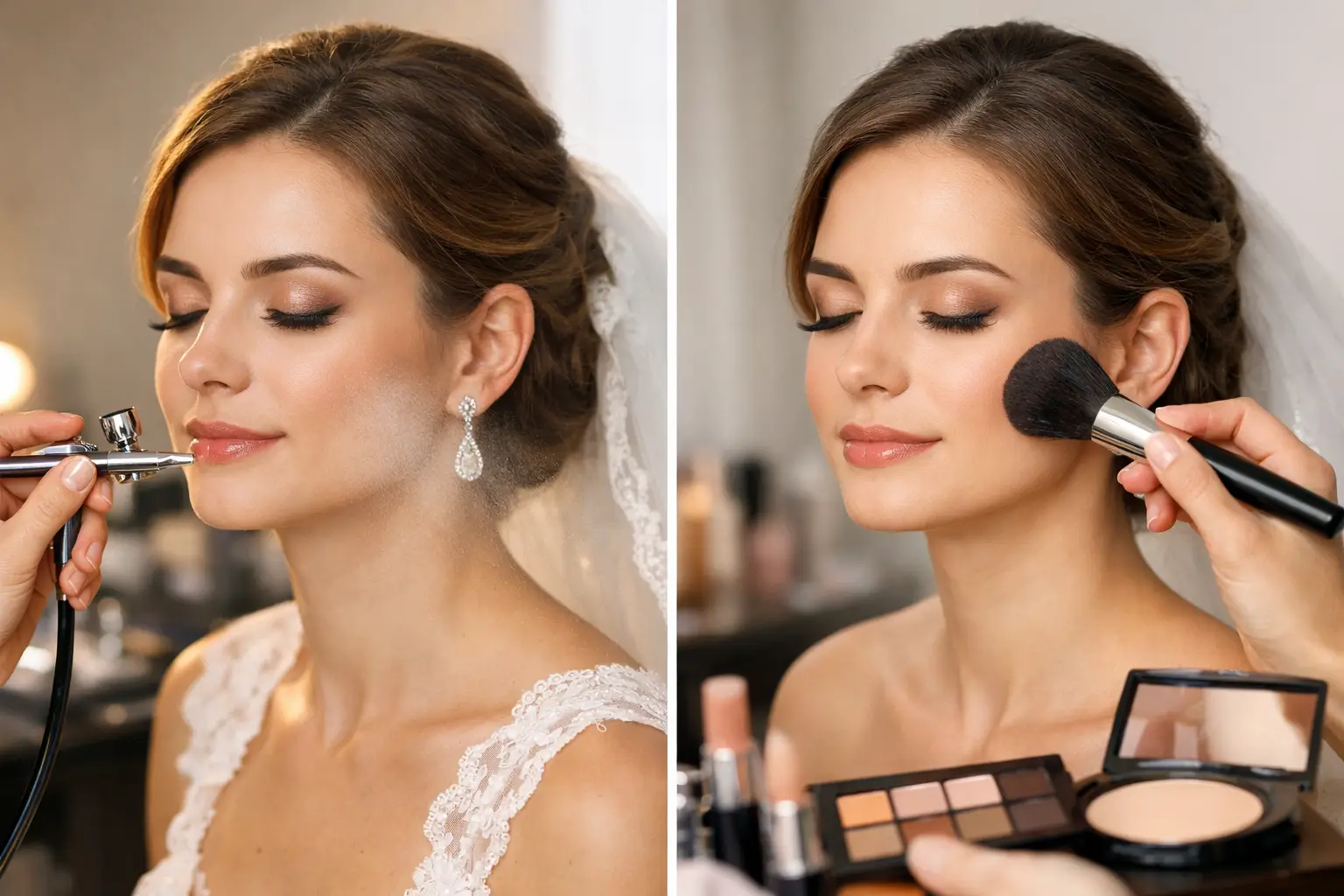
Your wedding makeup needs to hold up through a first look, hugs from loved ones, mountain-weather surprises, happy tears, and hours in front of the camera. That is why the choice between airbrush makeup vs traditional makeup deserves more than a quick social media comparison. Both can create beautiful, long-lasting bridal makeup. The best choice comes down to your skin, your preferred finish, your wedding-day conditions, and how you want to feel when you look in the mirror.
For many brides, the goal is not to look heavily made up. It is to look like themselves on their very best day: polished, radiant, comfortable, and confident from the first photo to the last dance.
Airbrush Makeup vs Traditional Makeup: The Core Difference
Airbrush makeup is applied with a small compressor and stylus that sprays a fine mist of foundation onto the skin. The artist builds coverage in sheer layers, creating an even, lightweight-looking complexion. Airbrush formulas are commonly silicone- or water-based and are selected for their ability to set well and resist transfer.
Traditional makeup is applied by hand using brushes, sponges, and sometimes fingertips. It includes the professional foundations most people recognize, from luminous liquid formulas to cream and powder products. It offers an exceptionally broad range of shades, textures, coverage levels, and finishes.
Neither method is automatically more flattering or more professional. A skilled artist can create an elegant, camera-ready result with either application. The question is which approach best supports your complexion and your plans for the day.
Why Brides Choose Airbrush Makeup
Airbrush makeup is known for a refined, skin-like finish. Because product is misted onto the face in thin layers, it can look smooth and even without feeling heavy. Brides who usually prefer light coverage often appreciate that it feels less noticeable than a fuller traditional foundation application.
It is also a popular option for weddings because it is typically designed to wear well. Once set, many airbrush formulas are water-resistant and less likely to transfer onto clothing, hands, or a partner’s shoulder during a close embrace. For a summer ceremony, a full dance floor, or a day with plenty of outdoor portraits, that durability can be reassuring.
Airbrush can be especially lovely for brides with relatively even skin who want a soft, satin-to-natural finish. It photographs beautifully when the skin has been properly prepped and the artist uses the right amount of product. The effect is polished rather than masked.
There are practical considerations, too. Airbrush foundations do not always allow for easy touch-ups with the exact same product later in the day. If a bride needs extra coverage around a blemish or experiences tearful moments, a professional artist may use a compatible concealer or traditional product for precise correction. Airbrush is excellent for an overall finish, but it is not a one-size-fits-all solution for every detail of the face.
When Traditional Makeup Is the Better Fit
Traditional makeup gives an artist remarkable control. It can be sheered out for a fresh, natural look or layered carefully for more coverage. Cream, liquid, and powder formulas can be combined to address different needs across the face, such as redness around the nose, under-eye darkness, dry areas, or a blemish that needs targeted attention.
This flexibility makes traditional makeup an especially strong choice for brides with very dry skin, textured skin, active breakouts, rosacea, or hyperpigmentation that requires more customized coverage. A professional artist can choose hydrating products where the skin needs comfort and use longer-wearing formulas only where they are needed.
Traditional application also offers more variety in finish. A bride who wants a softly glowing complexion, a velvety matte look, or something in between may find it easier to achieve her ideal result with traditional products. It is not inherently less long-wearing than airbrush makeup. With thoughtful skin preparation, professional setting techniques, and the right products, traditional makeup can last beautifully through a full wedding day.
For brides who enjoy having a lipstick, powder, or concealer available for touch-ups, traditional makeup can feel more familiar and manageable. That said, most wedding-day touch-ups are about lip color, shine control, and the occasional happy tear rather than reapplying an entire complexion.
Coverage, Texture, and Real Skin
The most common misconception is that airbrush makeup always provides lighter coverage and traditional makeup always looks heavier. In reality, both can be customized. Airbrush can be built to medium or fuller coverage, while traditional foundation can be applied so lightly that it appears almost invisible.
Texture is where the conversation becomes more personal. Airbrush makeup rests on top of the skin in a very fine layer, which can look especially smooth from a comfortable photo distance. On very dry or flaky skin, however, any foundation can catch on texture if the skin has not been prepared well. A rich skincare routine the night before is not always the answer either. Products need time to absorb, and overly rich skin prep can affect makeup wear.
Traditional makeup may be the more forgiving choice when the artist needs to work selectively around texture. Rather than applying one formula everywhere, she can adjust the technique and product placement across the face. For some brides, that custom approach produces a more natural result than airbrush ever could.
The right answer is not about hiding every pore. Real skin has texture, especially in close-up photos. The goal is balanced, healthy-looking skin that still looks beautiful in person.
How Each Option Performs in Wedding Photos
Both airbrush and traditional makeup can photograph exceptionally well. Professional photography, natural light, flash, and editing all influence the final image more than the application method alone.
Airbrush makeup can create a smooth, even appearance in portraits, particularly for brides who want a clean and understated complexion. Traditional makeup can create the same effect while offering more precise correction and dimension. Contour, blush, and highlight are often applied traditionally even when an airbrush foundation is used, because these products benefit from more detailed placement.
A good bridal makeup application also needs enough structure to show up in photographs. Makeup that feels perfect for a casual brunch may disappear under bright daylight or camera flash. This does not mean your wedding makeup should feel dramatic. It means your artist will thoughtfully balance foundation, color, brows, and eye definition so your features remain present in photos while you still feel like yourself.
If you are planning an Asheville or Blue Ridge Mountain wedding, consider your setting. Bright outdoor ceremonies, shifting cloud cover, humid summer afternoons, and cooler evenings can all affect how makeup looks and wears. Your artist should build your makeup around those conditions rather than relying on a single method for every bride.
The Value of a Bridal Trial
A bridal trial is the best place to decide between airbrush and traditional makeup. It gives you the chance to see the finish on your own skin, wear it for several hours, and notice how it feels as your skin changes throughout the day.
Come prepared to share inspiration, but also explain what you do not like. Perhaps you dislike the feeling of foundation, worry about dry patches, usually get oily through the T-zone, or want freckles to remain visible. These details help your artist make choices that are personal rather than formulaic.
During a trial, wear the makeup out into natural light and take a few photos from different distances. Do not judge the result only from a magnifying mirror. Bridal makeup is meant to be seen in motion, in conversation, in photographs, and from across the room as you walk toward the people you love.
At Jeanne’s Hair & Makeup, the focus is always on a customized, calm experience rather than pushing one application method. Your artist can recommend the approach that best suits your skin, your desired coverage, and the pace of your celebration.
Choose the Finish That Lets You Feel Present
Choose airbrush makeup if you love a lightweight, even complexion and want a durable finish with minimal transfer. Choose traditional makeup if your skin needs more individualized coverage, you want a specific glow or texture, or you value the flexibility of tailored products and touch-ups. Many brides benefit from a thoughtful combination of both.
The most beautiful wedding makeup is not defined by the tool used to apply it. It is the makeup that wears comfortably, reflects your style, and lets you forget about your face long enough to be fully present for your day.

Comments are closed.