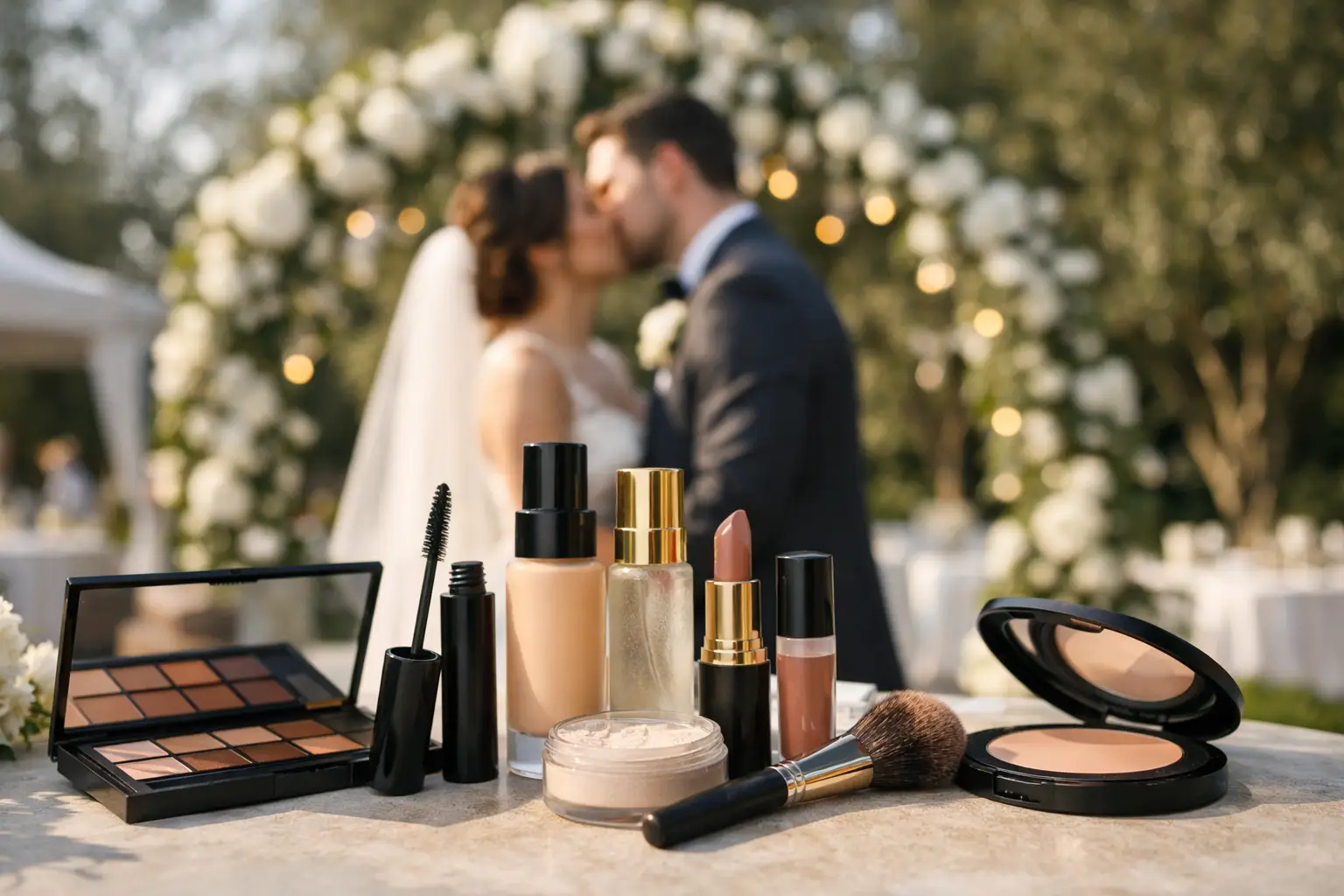
An outdoor wedding asks more of makeup than a typical event. There may be bright sun during portraits, humidity at the ceremony, a breeze that lifts hair across your face, happy tears, and a warm dance floor waiting after sunset. If you are asking what makeup lasts through an outdoor wedding, the answer is not simply “more makeup.” It is thoughtfully prepared skin, lightweight long-wear layers, and a plan that suits your venue, weather, and personal comfort.
For a bride who wants to look like herself, the goal is polished, even, and luminous skin that remains beautiful in person and in photographs. The right application should feel secure without looking heavy or mask-like when you are standing in natural light.
What Makeup Lasts Through an Outdoor Wedding?
The most dependable outdoor bridal makeup combines long-wear complexion products, cream-and-powder layering where it is useful, water-resistant eye makeup, and a setting method tailored to your skin type. It is less about one miracle foundation and more about making each layer work together.
A professional artist begins with the conditions. A May wedding in Asheville with soft mountain cloud cover calls for a different finish than an August ceremony at a sunny vineyard. A covered pavilion may protect you from direct heat but still hold humidity. A mountaintop venue can be breezy and surprisingly cool, which can leave dry skin looking textured by the end of the day.
Your desired look matters, too. A natural bridal makeup look can absolutely last outdoors, but it should be built differently from a full-glam evening look. Sheer does not have to mean short-lived, and matte does not always mean flat. The most flattering result is usually a softly perfected complexion with strategic shine control rather than a completely powdered face.
Start With Skin Preparation, Not Foundation
Long-lasting makeup begins before the makeup bag opens. In the week leading up to your wedding, avoid introducing strong new skincare treatments, peels, or products that could cause irritation. Consistent hydration and a familiar routine are more helpful than chasing a last-minute glow.
On the wedding morning, skincare should support your makeup instead of competing with it. Clean, well-moisturized skin gives foundation something smooth to adhere to. However, rich creams, facial oils, or thick sunscreen layered immediately before makeup can cause complexion products to separate, especially in humid conditions.
A makeup artist may use a light hydrating layer for dry areas and a blurring or oil-controlling primer only where it is needed, such as the T-zone. This is more effective than applying a heavy primer across the entire face. It also helps preserve a skin-like finish on the cheeks while keeping the nose, forehead, and chin from becoming overly shiny.
Sun protection deserves special attention for daytime celebrations. Wear sunscreen during your pre-wedding events and travel, but talk with your artist about wedding-day choices. Some high-SPF mineral formulas can create a pale cast in flash photography, while certain very dewy formulas can affect makeup wear. A professional will help balance protection, photography, and the amount of direct sun you expect to encounter.
Choose Lightweight Layers That Can Handle Heat
A long-wear foundation does not need to be thick. In fact, too much product is often the reason makeup breaks apart during an outdoor celebration. A skilled application uses thin layers, pressing product into the skin and adding coverage only where needed. Concealer can brighten under the eyes and cover specific areas without forcing the foundation to do every job.
For outdoor wedding makeup, a satin or natural-matte complexion finish is often the most practical choice. Very luminous products can become shiny once warmth and perspiration enter the picture. Extremely matte products may emphasize dehydration, fine lines, or texture in close-up photographs. The best finish leaves the high points of the face softly radiant while keeping the center of the face controlled.
Cream blush and bronzer create beautiful dimension, but they benefit from being set with a compatible powder formula. This layering technique gives color more staying power without requiring a thick blanket of powder. A soft powder blush over a cream blush, for example, can help maintain a healthy flush through hugs, tears, and photographs.
The same principle applies to contour and highlight. A gentle sculpted effect photographs beautifully in natural light, while heavy contour can look more dramatic than intended outdoors. Choose a refined glow rather than a glittery highlight. Larger sparkle particles can catch harsh sunlight and look uneven in photography.
Eyes That Stay Defined Without Feeling Overdone
Outdoor conditions can be hard on eye makeup. Heat, watery eyes, wind, and sunscreen can all contribute to creasing or smudging. An eye primer gives shadow a stable base, while a combination of cream and powder shadows creates depth that holds its shape.
Waterproof mascara is a reliable choice for brides who expect happy tears, but it has a trade-off: it can be more difficult to remove and may feel slightly stiffer on the lashes. Tubing mascara is another option for some clients because it resists moisture and removes with warm water. Your artist can recommend the better choice based on your lashes, your ceremony, and whether you tend to have watery eyes.
For eyeliner, a water-resistant gel or liquid liner placed close to the lash line usually wears better than a soft pencil alone. Lashes can also make a meaningful difference. Individual or carefully chosen strip lashes add definition in photographs, allowing the rest of the eye makeup to remain soft and timeless.
Set Makeup Strategically, Then Let It Look Like Skin
Setting powder is valuable, but more is not always better. Pressing a finely milled powder into the T-zone, under the eyes, and around the nose helps reduce movement. Leaving the outer cheeks with less powder keeps the complexion from looking dry or overly matte.
A long-wear setting spray is the final step that helps meld powders and creams together. It can also reduce the powdery appearance that sometimes develops in bright daylight. On humid days, your artist may use a setting spray in stages during the application rather than only at the end.
This is where wedding-specific experience matters. A makeup routine that looks perfect for an hour in an air-conditioned studio may not perform the same way through a first look, ceremony, family portraits, cocktail hour, and dancing. At Jeanne’s Hair & Makeup, the focus is on choosing a finish that feels comfortable for the full rhythm of a wedding day, not just the first photograph.
Keep a Small Touch-Up Plan Close By
Even expertly applied makeup should be allowed a few thoughtful touch-ups during a long outdoor wedding. That does not mean you will need to redo your face. A small kit can handle the normal realities of the day without interrupting the celebration.
Bring blotting papers before powder. When shine appears, gently press a blotting paper onto the skin first, then add only a small amount of powder if needed. Reapplying powder over perspiration without blotting can create texture. Keep your chosen lip color, a matching liner, and a comfortable balm available as well. Lipstick is the product most likely to need attention after eating, drinking, and kissing your new spouse.
Ask a bridesmaid, planner, or trusted family member to hold the kit. It is one less detail for you to manage, and it allows you to focus on being present. If rain is in the forecast, a clear umbrella and a few extra blotting papers are far more useful than trying to over-powder your makeup before you walk outside.
Use Your Bridal Trial to Test for Your Real Wedding Day
A bridal trial is the best time to answer the question of what makeup lasts through an outdoor wedding for you specifically. Bring inspiration images, but also share practical details: your venue, ceremony time, season, dress neckline, usual skincare, and how you normally feel about foundation coverage. If you know you get oily around your nose or dry beneath your eyes, say so. Those details shape the technique.
Whenever possible, wear your trial makeup for several hours. Step outdoors, take photos in window light, and notice how it feels as the day goes on. A look that photographs beautifully but feels too matte or too full is not the right wedding-day choice. Your artist can adjust the finish, lip formula, lash style, or level of coverage before the celebration arrives.
Your wedding makeup should support the moments you have planned, from a sunlit ceremony to the final dance, without asking you to worry about every glance in the mirror. With the right preparation and a calm professional touch, you can step outside, breathe in the mountain air, and feel fully like yourself.

Comments are closed.