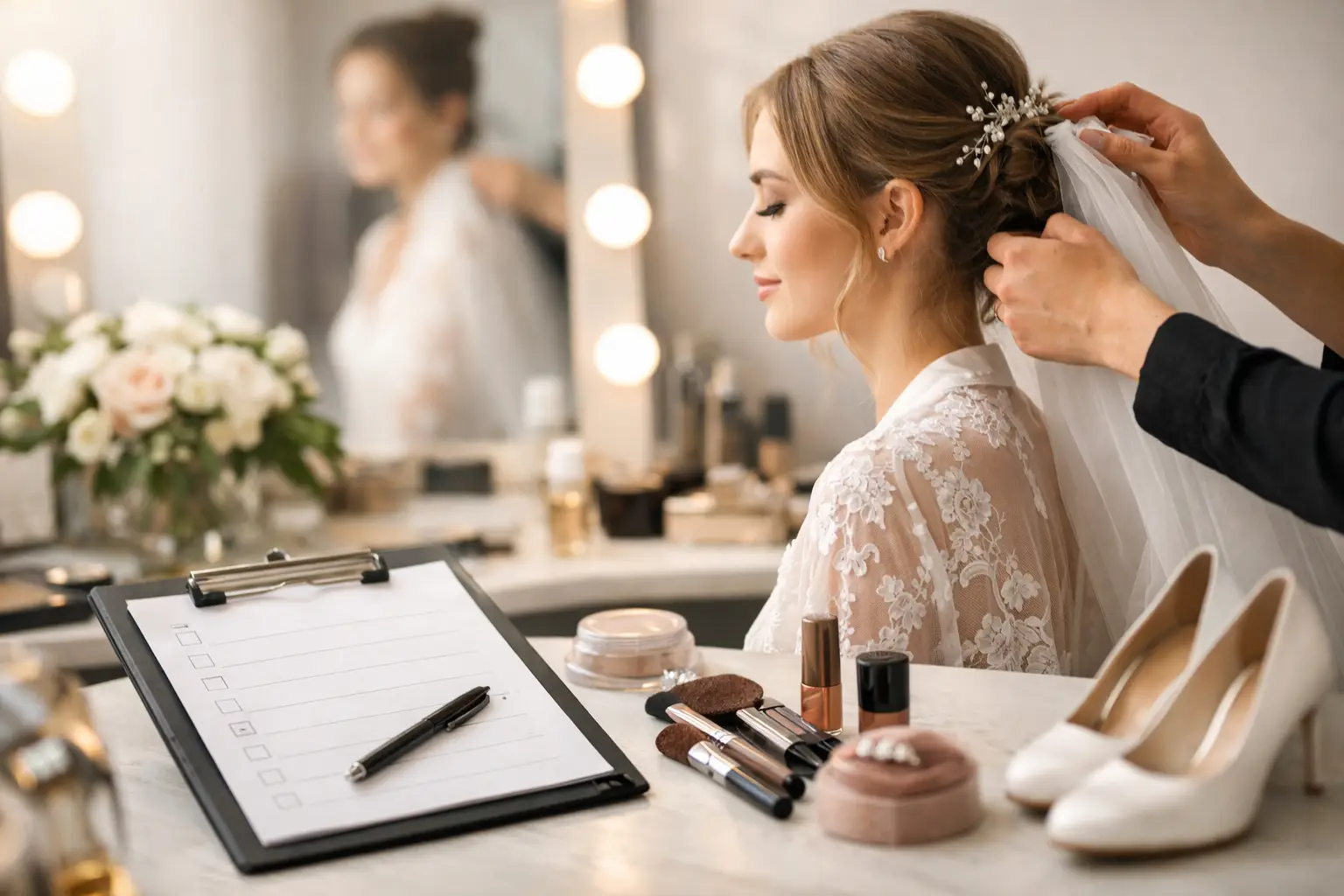
A bridal trial should leave you with more than a beautiful reflection in the mirror. It should give you the confidence that your wedding-day beauty will feel like you, wear comfortably, and hold up through photos, hugs, happy tears, and a full celebration. This bridal trial checklist review helps you look beyond the first impression and confirm the details that make a polished look truly wedding-ready.
Arrive With a Clear Starting Point
Your trial is most productive when your artist can understand the feeling you want, not simply replicate one saved image. Bring a few inspiration photos that show the elements you love: soft face-framing pieces, a low textured bun, luminous skin, defined eyes, or a romantic neutral lip. Include photos of looks you do not love, too. This can be just as helpful for setting clear expectations.
Consider the full setting of your celebration. A timeless look for a Blue Ridge mountain venue may need to account for wind, humidity, a ceremony outdoors, and the way natural light shifts throughout the day. A formal evening reception may call for slightly more definition than a daytime elopement. Your dress neckline, veil, jewelry, hair length, extensions, and usual comfort level all shape the right approach.
It is also helpful to arrive with clean, dry hair unless your artist gives you different instructions. For makeup, come with a clean face and let your artist know about any skin sensitivities, lash preferences, or products that have caused irritation in the past.
Bridal Trial Checklist Review: Evaluate the Whole Look
Once the hair and makeup are complete, pause before deciding that the trial is finished. A bridal look needs to be lovely up close, but it also needs to work from every angle and in the moments when you are moving naturally.
Start by looking at yourself in daylight near a window, then take photos and short videos from the front, sides, and back. Ask to see the style while standing, sitting, smiling, and looking down. If you will wear a veil, place it in your hair during the trial. If your dress has an open back or dramatic neckline, consider wearing a top with a similar shape so you can better judge the balance of the finished style.
For makeup, pay attention to whether your skin still looks like skin. A little extra structure is often necessary for professional photography, but your foundation should not feel heavy or mask your natural features. Check that the under-eye area is smooth, the brows feel balanced, and the lip color remains flattering when you smile. If you usually wear glasses, try them on. If you are prone to watery eyes, mention it before deciding on liner, lashes, or mascara placement.
For hair, assess both beauty and security. Can you turn your head comfortably? Does the style feel too tight at the hairline? Are pins hidden and secure? Does the volume feel like you, or does it feel overly styled? A style that photographs beautifully but gives you a headache after an hour is not the right wedding-day choice.
Wear-Test It Before You Commit
The most useful part of a trial often happens after you leave the chair. Wear your hair and makeup for several hours if your schedule allows. Have lunch, step outside, talk, laugh, and notice how the look feels as you move through a normal afternoon.
This is especially valuable for destination weddings and outdoor celebrations in Western North Carolina, where changing temperatures and mountain weather can affect both hair and makeup. Your artist can plan for those conditions, but only if you are honest about what happens during the wear test. A few loosened curls may be exactly the relaxed, romantic finish you wanted. A style that falls flat or pulls uncomfortably is valuable information, not a failure.
Take a few notes before you wash your face or take your hair down. Did your lipstick fade evenly? Did your makeup crease anywhere? Did the curl pattern soften in a way you liked? Did you wish the blush were warmer, the eye look softer, or the hairstyle slightly less voluminous? Specific feedback gives your artist the direction needed to refine the look with confidence.
Confirm the Details That Affect Your Morning
A beautiful trial is also the right time to review the logistics that protect your wedding morning from unnecessary stress. Your beauty team should know your getting-ready location, ceremony time, photography schedule, and the number of people receiving services. These details determine when the team arrives, how the service timeline is organized, and when you will be ready for final photos.
Discuss whether you would like your hair and makeup completed before your photographer arrives or whether you want the finishing touches documented. Confirm where you will get dressed and whether there is enough natural light, counter space, seating, and access for the team. At a venue or rental home, a little advance planning can make the room feel calm rather than crowded.
Your final conversation should cover these four practical points:
- Your approved hair and makeup plan, including any changes requested after the trial.
- The wedding-day schedule, arrival time, location, and the order of services for your group.
- The accessories you will bring, such as a veil, hairpiece, extensions, lipstick, and touch-up items.
- The contact person who can help with venue access or answer timing questions on the morning of the wedding.
If you are booking on-location styling, ask how touch-up services work and whether your artist will remain through getting dressed, portraits, or the ceremony. Some brides prefer a concise beauty schedule and a finished look before photos begin. Others value having an artist nearby for veil placement, flyaway checks, and touch-ups. Neither choice is universally better. It depends on your timeline, budget, location, and how much support feels reassuring to you.
Be Honest About What Does Not Feel Like You
A trial is not a test of whether you can be the perfect bride. It is a collaborative appointment designed to make sure you feel comfortable, recognized, and cared for. If a look feels too glamorous, too minimal, too formal, or simply unfamiliar, say so kindly and directly.
The best adjustments are specific. Instead of saying, “Something is off,” try, “I love the softness, but I would like less contour,” or “I want the bun to sit a little lower and feel less structured.” Your artist can then make thoughtful changes without guessing. You should never feel pressured to choose a look because it is trending or because it looked beautiful on someone else.
This is also the moment to discuss the people getting ready with you. Bridesmaids, mothers of the couple, flower girls, and groom grooming services all require different amounts of time and attention. A professional wedding beauty team can coordinate the flow, but an accurate service count and realistic timeline are essential. Jeanne’s Hair & Makeup plans each wedding morning with this kind of calm, professional touch so the beauty experience supports the celebration rather than competing with it.
Save Your Final Plan
Before the trial ends, take clear photos of the approved look and make a note of the details you loved. Your artist may document products, shades, placement, curl direction, and accessory positioning, but your own photos can be helpful as well. Keep your notes with your wedding planning materials so you can reference them if questions come up later.
If you make skin-care changes, get a haircut, add extensions, change your hair color, or decide on a different veil after the trial, let your artist know. Small changes can affect the final result, and a quick conversation ahead of time is much easier than adjusting expectations on the wedding morning.
Your trial is where inspiration becomes a dependable plan. When you have confirmed the look, tested the comfort, and clarified the timing, you can sit down on your wedding day knowing the details are already in caring hands. That peace of mind lets you focus on the people around you and the moment you have been waiting to celebrate.

Comments are closed.